The three countries have benefited the most from membership of the World Trade Organization, according to a new report to mark the body's 25th anniversary. Their combined revenues in just one year were $239 billion.
The world's three biggest exporters, Germany, China and the United States, are the biggest beneficiaries of membership of the World Trade Organization, a new study by the Bertelsmann Foundation published on Monday revealed.
The countries have achieved the biggest income gains as a result of the rules-based global trading system, the report found.
The US benefited by $87 billion (€77.7 billion) in 2016, China by $86 billion while Germany reaped some $66 billion in financial rewards.
A group of scientists calculated the wealth effects of WTO membership on 180 countries, including all 164 WTO members. Both internal and external trade flows were included.
Read more: Donald Trump announces 'Phase One' of US-China trade deal
-
Trade, tariffs and toilet brushes — 2019's top business stories
Busted flush?
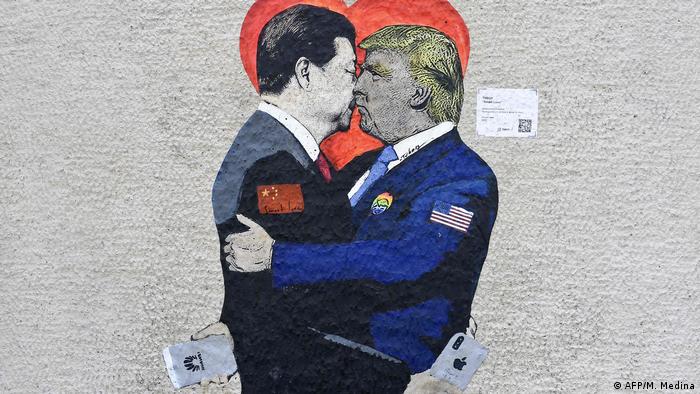
The US president's voracious social media activity moved the markets and even provoked the Federal Reserve. Trump put pressure on the US central bank to lower interest rates to prevent a slowing economy just as he seeks reelection next year. China, another victim of Trump's ire due to the ongoing trade war, retaliated with billions in tariffs. In other news, this toilet brush became a bestseller.
-
Trade, tariffs and toilet brushes — 2019's top business stories
Tariffs delayed, no trade deal yet
Two years of trade tensions have seen the US and China levy tariffs on over $450 billion worth of each other's exports. Despite his harsh rhetoric, Trump delayed an increase in the tariff amount on some products and put off plans to penalize a further $156 billion worth of Chinese goods citing progress over a bilateral trade deal. In December, the two sides inked the first phase of the agreement.
-
Trade, tariffs and toilet brushes — 2019's top business stories
Huawei finished?
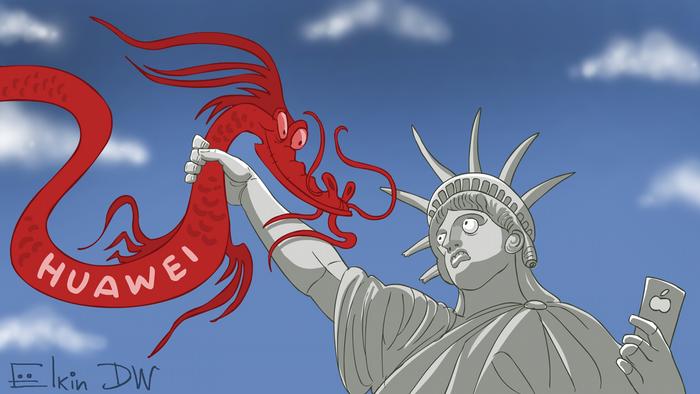
The Huawei blockade continued to be a major sideshow of the trade war. Amid concerns of possible Chinese espionage, Trump temporarily banned US firms from doing business with the telecoms giant. The debate spilled over to Germany where Chancellor Angela Merkel faced pressure to exclude the Chinese firm from bidding to build the country's 5G network. Despite this Huawei won one of the contracts.
-
Trade, tariffs and toilet brushes — 2019's top business stories
IPO investors demand profits
2019 was the year investors pushed back on IPOs with over-hyped valuations. Ride-hailing app Uber hit the market in May with a valuation of $75.5 billion. It has since lost a third of its value due to concerns that the firm is burning too much money and not growing revenue fast enough. Shared workspace startup WeWork canceled its listing in September as investors questioned its business model.
-
Trade, tariffs and toilet brushes — 2019's top business stories
Tesla picks Germany
Tesla's decision to build its first European electric car and battery factory near Berlin was widely cheered in Germany. The €4 billion Gigafactory will bring thousands of jobs to the eastern state of Brandenburg and is also seen as a "gloves off" message to German automakers that have been late in committing to the new era of electromobility.
-
Trade, tariffs and toilet brushes — 2019's top business stories
New deal, new Brexit delay
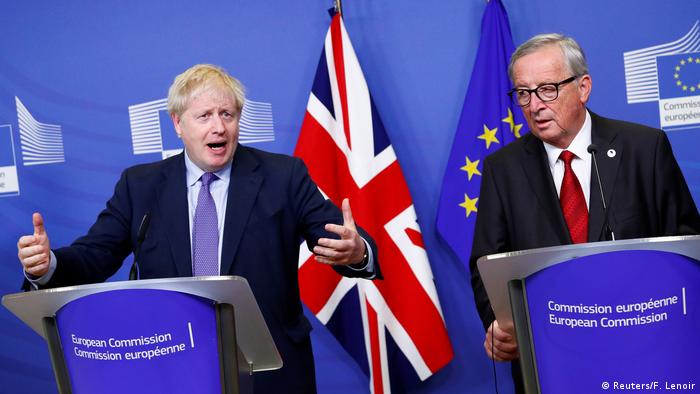
British Prime Minister Boris Johnson hailed a revised EU divorce deal in October. Just like the previous Brexit agreement, which failed a parliamentary vote three times, his new plan was voted down on the first attempt. To break the paralysis, Johnson called a snap election, which he won with a landslide. Brexit is therefore back on, with the UK set to depart the EU at the end of January.
-
Trade, tariffs and toilet brushes — 2019's top business stories
Boeing's 737 Max in trouble
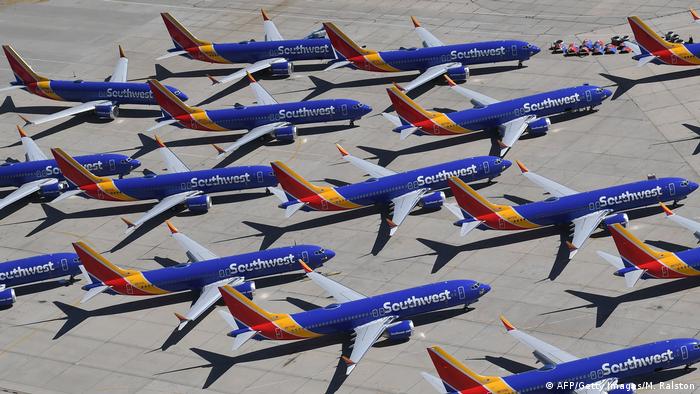
After two fatal crashes in five months, Boeing in March grounded its 737 Max jetliner worldwide after investigators questioned the role of the aircraft's MCAS anti-stall system. Several pilots had complained about difficulties in controlling the aircraft during takeoff. With 371 of the 2-year-old planes already in operation, the grounding impacted the profitability of dozens of airlines.
-
Trade, tariffs and toilet brushes — 2019's top business stories
Overhaul at Deutsche Bank
In July, Germany's biggest lender, Deutsche Bank, announced a radical restructuring including the loss of 18,000 jobs globally and the creation of a bad bank to offload toxic assets. The firm, which has been trying for years to improve profitability, shed its equities sales and trading business. Instead, it plans to refocus on its German and European business.
-
Trade, tariffs and toilet brushes — 2019's top business stories
Saudis break IPO record
The most profitable story of the year was this month's launch of Saudi Aramco's IPO. The on-off sale of 1.5% of the world's biggest oil company finally went ahead but only to Saudi and regional investors. A simultaneous overseas listing was abandoned amid foreign investor concerns. On its first trading day, Aramco shares climbed 10% giving the oil giant a market valuation of around $1.88 trillion.
-
Trade, tariffs and toilet brushes — 2019's top business stories
Bayer's bosses in the dock
German chemicals giant Bayer faced a shareholder revolt in April over the way the company handled the acquisition of US rival Monsanto. Bayer's stock fell 30% in the six months after the takeover as it emerged that Monsanto was facing thousands of lawsuits that claimed its Roundup weedkiller caused cancer. Despite the outrage, Bayer's supervisory board kept supporting CEO Werner Baumann.
-
Trade, tariffs and toilet brushes — 2019's top business stories
Sun worshippers burned
In September, 150,000 holidaymakers were left stranded when travel giant Thomas Cook went bust. The UK government launched its largest peacetime repatriation of tourists. Its German subsidiary, responsible for around 40% of the group's revenues, was also forced to file for bankruptcy to protect itself. The government stepped in to compensate German tourists after an insurance fund ran out of cash.
-
Trade, tariffs and toilet brushes — 2019's top business stories
Will Lagarde do whatever it takes?
After Mario Draghi's eight-year term ended in November, Christine Lagarde stepped in to head the European Central Bank. The former IMF chief has yet to disclose much about her plans for eurozone monetary policy but has already called for countries using the single currency to boost public spending and investment to arrest a potential downturn next year.
Author: Nik Martin
Forty years of strong growth
While WTO members enjoyed an average export increase of 14% between 1980 and 2016, the Bertelsmann report found that exports to countries outside the WTO fell by an average of 5.5%.
In 2016, WTO membership led to an $855 billion increase in prosperity worldwide, about 1% of global gross domestic product (GDP).
"The WTO is the operating system of the global economy, that ensures daily that goods and services can circulate in a stable, rules-based environment," said Christian Bluth, a trade expert at the Bertelsmann Stiftung.
The report noted that nations with strong exports and manufacturing tend to benefit from their WTO membership, giving the examples of Mexico ($58 billion and South Korea $31 billion).
Read more: US, Mexico, Canada sign USMCA trade deal
Future in doubt
The Bertelsmann study was released to coincide with the WTO's 25th anniversary on January 1. The Geneva-based organization is facing unprecedented pressure from Washington, which complains that the trade body's appeals process — considered the Supreme Court of international trade — favors its global competitors.
For the past two years, the US has blocked appointments of new WTO appellate judges, allowing existing terms to lapse. Earlier this month, when the number of judges fell to just one — a minimum of three are needed to rule — the dispute settlement mechanism was rendered inoperative.
Read more: Boris Johnson rules out EU deal extension, renews hard Brexit fears
WTO struggles to contain China
Other countries have complained about the WTO's system for settling trade disputes.
Critics say that cases take too long to resolve, that the panel often overreaches in its rulings and that the agency is ill-equipped to deal with the challenge posed by the Chinese economy's unconventional blend of capitalism and state control.
In its report, Bertelsmann noted that the WTO's largest members, the US and China, are "increasingly escalating their customs disputes outside the organization."
The think-tank's Bluth called for an "urgent update" of the trade body but warned that "without the enforcement of rules, a rule-based system cannot exist for long."
He also cautioned countries that bypass the WTO and instead pursue purely bilateral trade agreements, saying they risk "enormous losses of prosperity in international trade."
mm/aw (AFP, dpa)
Each evening at 1830 UTC, DW's editors send out a selection of the day's hard news and quality feature journalism. You can sign up to receive it directly here.





No comments:
Post a Comment